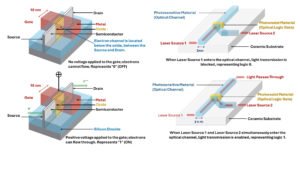

The expansion of quantum computing applications beyond theoretical models marks a pivotal era where quantum supremacy is being harnessed for practical, industrial-scale problem-solving. While early quantum research was confined to proof-of-concept experiments, recent advancements in hardware stability and error correction have allowed companies to transition into the “Quantum Advantage” phase. This shift is particularly evident in fields like molecular simulation and material science, where quantum processors can model atomic interactions with a level of precision that classical supercomputers cannot achieve. Industries are now leveraging these capabilities to accelerate the discovery of new drug compounds, develop more efficient catalysts for carbon capture, and engineer high-performance battery materials for the next generation of electric vehicles.
Beyond chemistry, quantum algorithms are being integrated into complex logistics and financial systems to optimize global supply chains and risk management. By processing vast datasets through quantum annealing and gate-based logic, organizations can solve optimization problems—such as route planning or portfolio diversification—in a fraction of the time previously required. This practical expansion is supported by the rise of “Quantum-as-a-Service” (QaaS) platforms, which allow developers to access quantum hardware via the cloud without needing to own the physical infrastructure. As these applications continue to mature, the focus is shifting from “if” quantum computing will work to “how fast” it can be scaled to revolutionize standard business operations and scientific inquiry.