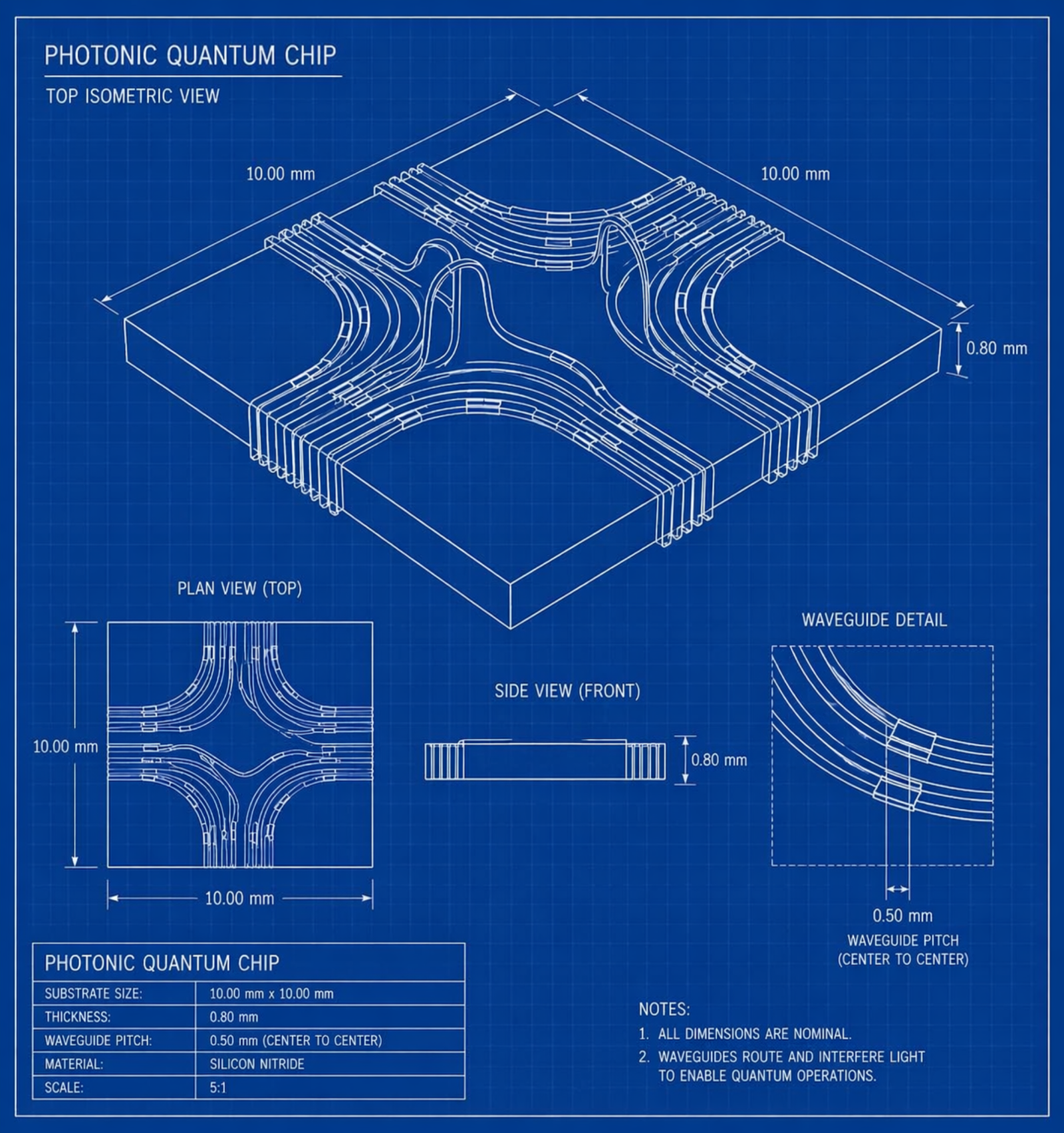
The achievement of a new stability milestone in photonic quantum systems represents a significant leap forward in the field of quantum computing and communication. Photonic systems, which use light particles (photons) to carry information, are prized for their ability to transmit data at high speeds with minimal interference; however, maintaining “coherence”—the state where quantum information remains stable—has historically been a major technical hurdle. This latest breakthrough indicates that researchers have successfully extended coherence times beyond previous industry benchmarks, allowing quantum states to persist longer without degrading. By improving the structural design and precision of components like waveguides, which guide light through the system, scientists can now create more reliable environments for complex quantum operations.
This increased stability is crucial for scaling quantum technology from experimental laboratory setups to practical, real-world applications. Longer coherence times mean that quantum bits (qubits) can perform more calculations and travel further distances in a network before errors occur. As these systems become more stable, they pave the way for ultra-secure quantum cryptography and the development of quantum computers capable of solving problems that are currently impossible for classical supercomputers. This milestone essentially proves that the technical barriers to long-lasting photonic quantum states are being systematically overcome, bringing us closer to a functional global quantum internet.